The Rise and Fall of CalcioClip: A Startup Story
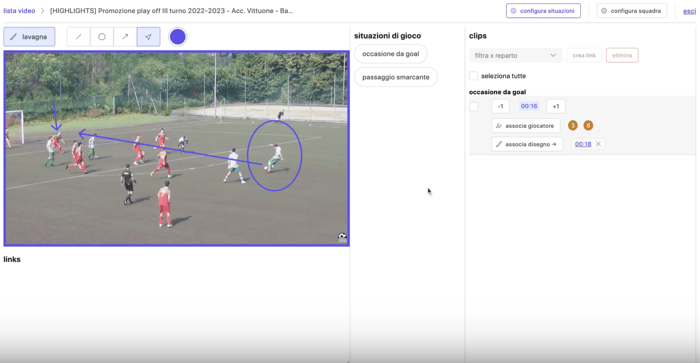
Calcioclip is Fabri's brainchild. We've been friends since childhood. Last year, we were in a bar in Milan, late into the night, slightly drunk. I leaned in and asked, "Got any good business ideas?" Fabri simply said, "I have one." I encouraged him, "Shoot!"
"You know, throughout my soccer career, coaches always tried to correct me by explaining mistakes verbally—sometimes during practice, sometimes after games, with a blackboard or a notepad. But near the end of my playing days, some coaches began using videos. They would rewind to just before my error, pause, clarify the context, then fast-forward to the exact moment, pause again, dissect the mistake, and finally play the clip to show me how it played out."
"And it worked better with video? Did it help you understand the errors more clearly?" I asked.
"Much better" he confirmed.
"So, you're envisioning an app that enables coaches to do precisely that?"
'Exactly!' he exclaimed.
The idea immediately made sense to me for several reasons:
- No need to invest much money
- The italian non-professional league is a niche (the competitors focus on the professional leagues)
- Drawing from personal experience, I was convinced of the tool's potential; leveraging recorded videos had significantly improved my 7-year-old's skiing, especially their right turns
- Fabri's background as a former amateur soccer player could provide us with a credible edge when reaching out to soccer teams to introduce the app
- The app did 1 thing: I like that kind of apps and it was easier to code it
I asked another friend, Stefan, to join us, and in 4 months we developed CalcioClip, a web app.
After developing the app, Fabrizio began reaching out to amateur soccer teams across Italy. His primary objective with each call was to secure a remote demonstration. The concept piqued interest in theory, and over the course of four months, we made calls to more than 500 teams. However, the outcome was disheartening: only a handful of demos were conducted, and not a single sale was made. We didn't stop there; we also targeted professional teams, hoping to enhance their youth training programs, but that avenue also led to a dead end. In response to these setbacks, we revised our sales strategy multiple times, adjusting our commercial offer from an initial annual subscription of 3000 euros to a more accessible monthly subscription of 49 euros.
We made the difficult decision to shut down the project at the end of October 2023. Upon reflecting on what went awry, two key issues became apparent:
-
The target decision-maker for our product was ambiguous. Initially, it seemed that our primary sales efforts should be directed at coaches. However, we quickly discovered that purchasing decisions required approval from the General Manager, who in turn needed authorization from the President. Moreover, even with the General Manager's interest, if the coach wasn't on board, the sale would stall. Coordinating all these stakeholders was challenging and often unfeasible.
-
Currently, coaches improve their players' skills with quick tips on the field or through strategic discussions in the locker room, utilizing blackboards or personalized analysis on notepads. Our product was not designed to reduce their workload; on the contrary, it would have introduced additional hours of analysis post-game, potentially adding three to four more hours of work per week.
So, next project I will keep in mind that:
- Who is going to decide to buy the app should be as clearly defined as possible
- Not enough for the product to be effective, it should be less work for the user
