Sometimes the best strategy is not being first
When you launch a product, it feels like you have to invent something nobody has seen before. A new category, a new mechanic, a new name for a familiar thing. I did the opposite, and so far I don't regret it.
Right now I'm working on Sowiks, a screenshot tool for Mac. The category isn't new, the competitors are strong — and they have already done the most expensive work for me. They explained to hundreds of thousands of people why a dedicated screenshot app is worth having at all, and why it beats the one built into the system.
Kotler once put it roughly like this: the best marketing is when the market is already educated, and all you have to do is not ruin the experience. And improve it a little, of course.
When you enter a new category, you pay for everything at once. For explaining why this is needed. For a habit that doesn't exist yet. For the fact that someone is hearing the word for the first time. In a mature category that bill has already been paid by somebody else.
That's probably the biggest advantage of a mature market. People no longer ask "why would I need a product like this?" They ask "why should I switch to you?" From a marketing standpoint, that is a much cheaper question.
Compete for the choice, not for the category
A lot of founders are afraid of competitors. In reality, having no competitors usually means demand doesn't exist yet, or you'll have to create it from scratch.
When there are many competitors, it means people are already looking for a solution. They're typing queries into Google, watching YouTube reviews, reading Reddit threads, comparing products. You don't have to convince them to buy the category. You have to convince them to buy your product.
That's a completely different level of marketing spend.
I'm a customer of my own competitor
I've used CleanShot X for years. I got a bunch of friends hooked on it. And now I'm trying to move myself over to my own product.
It's less romantic than it sounds. Every time something familiar is missing, I feel it personally instead of reading about it in a survey. A product you can't wean yourself off is a fairly honest test.
I'm not even trying to do everything differently just to be different. If an interaction works and people are used to it, why break that flow? Let people carry their habits over instead of learning a product from scratch.
And on top of that familiar set, I add what competitors don't have. For example, screenshots that upload themselves straight into the WordPress media library while you're putting an article together. A small thing that personally saves me about twenty minutes per piece.
Don't copy. Give people a reason to switch
The hard part isn't making a product that's similar. The hard part is giving someone a good enough reason to change the tool they already use.
They have already invested time in a competitor: learned the hotkeys, set up a workflow, got used to the interface. That's a cost too.
So a new product can't just be "not worse". It has to save time regularly, remove a real pain, or open up something that wasn't possible before.
Monobank and Formula 1
Here's an example from Europe. Monobank, a mobile-only bank from Ukraine, used exactly this approach. At launch they took the tariffs of PrivatBank — the largest retail bank in the country, the one almost everybody already banked with — and made every single line more attractive. Not a new category. Not a new service. The same product, just better on every row.
It reminds me of Formula 1. First you sit on someone's tail, use their slipstream, save fuel. Then you find the moment and overtake.
Being first is expensive. Being the one who makes a familiar thing faster, simpler or more convenient is much cheaper.
The most underrated source: someone else's changelog
Here's something I started doing that I had never done before.
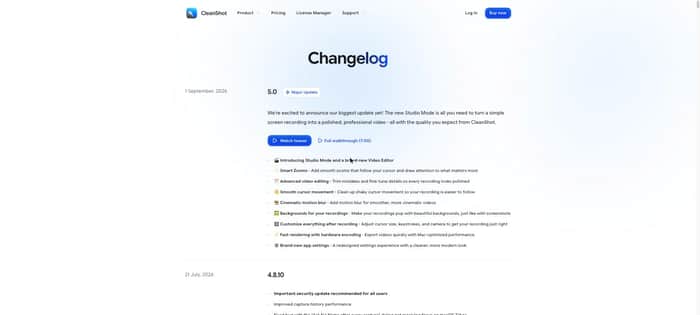
Before taking on a big feature, I read through my competitors' changelogs. Not the landing page, not the features page — the actual release history over several years.
Marketing always shows you the finished result. A changelog shows the path the team took to get there. You can see where they rolled a decision back. Where they spent years polishing the same capability. Where something appeared, survived three releases and quietly disappeared.
Essentially it's a record of someone else's mistakes, compromises and technical debt, without having to step on any of it yourself.
A changelog is also a great source of marketing insight. If a team invests in one direction for years, users probably really do want it. And if a feature is never mentioned again, maybe it didn't deliver the value they expected.
So now, before building, I ask AI not "how do I do this?" but "what have competitors already gotten burned on?" The answer to the second question saves far more time.
Marketing starts before the first release
Another thing I've come to understand lately: marketing isn't only the promotion that comes after launch.
When you read competitors' reviews, go through their changelogs, look at which features people are willing to pay for and which ones they ignore — that's marketing too.
You're studying a finished focus group that other companies already paid for.
What I took away from App Store review
Shipping the app is its own story. The "learn from other people's bruises" principle works here too, except the bruises are mostly my own, from previous releases.
Three things I wish I'd known earlier:
- Sign in with Apple is mandatory. If you offer any third-party login — Google, Facebook, anything — Apple will require its own option next to it. No exceptions.
- Full account deletion has to be in the app. People must be able to delete their account together with all their data from inside the app. Not by emailing support.
- App Store copy has to match the functionality exactly. This is what got me rejected most often. If the description mentions a capability that doesn't exist, or one that's hidden behind a paywall without explanation, that's grounds for rejection.
That's a marketing lesson too. Good marketing doesn't promise more than the product actually does. Sometimes one imprecise sentence costs you several days of waiting for a new review.
Instead of a conclusion
I don't think "don't be first" is universal advice. There are categories where the first player takes almost everything.
But if the market is already educated, the competitors have already done the most expensive work, and you use someone else's product every day and can see what it's missing — maybe you don't need to invent a new category.
Maybe you just need to do a better job of what already exists.
Because sometimes the strongest marketing strategy isn't creating a new market. It's becoming the best choice in a market that already exists.
Originally published in Ukrainian on cases.media.

This reframes something I'd been treating as a weakness. StareBrain isn't first at "control your phone with natural language" — Bixby Routines, Tasker, Google Assistant routines all exist and have already done the expensive work of explaining why phone automation is worth having. I'd been quietly worried about that. Reading this, the actual question isn't "why would anyone want this," it's "why switch," which is a cheaper, more specific problem to solve.
The changelog-mining idea is the one I'm going to actually steal, and omri's framing of it as reading someone's measurement decisions rather than their feature list is the sharper version. Tasker's been around long enough to have years of changelog — if there's a confirmation/permissions feature they built, then quietly walked back or never expanded on, that's real signal about what users actually wanted versus what looked good on a roadmap. Cheaper to read that history than to independently rediscover the same dead end.
On aryan's switching-cost question for your own case — I'd guess the honest answer is that a WordPress upload feature converts a specific niche (people who screenshot for articles regularly) hard, and does nothing for everyone else, which might be fine if that niche is big enough to start with rather than needing to win the general "screenshot tool" audience first.
The changelog deep-dive is a measurement signal most teams ignore. What you're really doing is reading the history of their measurement decisions - which features they doubled down on (meaning their metrics said YES) and which they abandoned (metrics said NO).
That's not just learning from their code, that's learning from their measurement system. Understanding what signals drove their roadmap decisions is more valuable than copying their final output.
The switching-cost point seems like the real battle here. The WordPress integration saves you 20 minutes per article, but have other existing screenshot-tool users shown the same pull strongly enough to actually switch?