5 Best Load Testing Tools (Open Source) for DevOps in 2026
Choosing the right load testing tool is essential for ensuring your application performs reliably under heavy traffic. Whether you're testing REST APIs, microservices, or full-stack applications, the right tool can uncover bottlenecks before they impact users.
In this guide, we'll compare the five best open source load testing tools — Keploy, Apache JMeter, Gatling, The Grinder, and k6 — covering their features, advantages, limitations, and ideal use cases to help you select the right solution.
What Are Open Source Load Testing Tools?
Open source load testing tools create real or synthetic traffic to test performance, stability, and scalability. Open source load testing tools have several benefits, they are:
-
Free and supported by the community
-
Customizable for tailored testing scenarios
-
Can be found for automated load testing or CI/CD integration
-
Can be used by teams to observe bottlenecks and improve performance before production
This differs from proprietary load testing software, enabling teams to achieve flexibility, transparency, and, more importantly, extensibility. Using software load testing tools earlier in development lowers the risk of downtime and allows for a seamless experience for users.
Top 5 Open Source Load Testing Tools for Modern DevOps
In the following section, we explore five different tools:
-
Keploy
-
Apache JMeter
-
Gatling
-
The Grinder
-
K6
They're some of the best load testing tools due to their strong reliability, greater flexibility, and integration capabilities. Let’s learn more about each of them.
How is the Load Testing Infrastructure Different Across the Different Tools?
Understanding each tool’s architecture helps you pick the right load testing framework for your project:
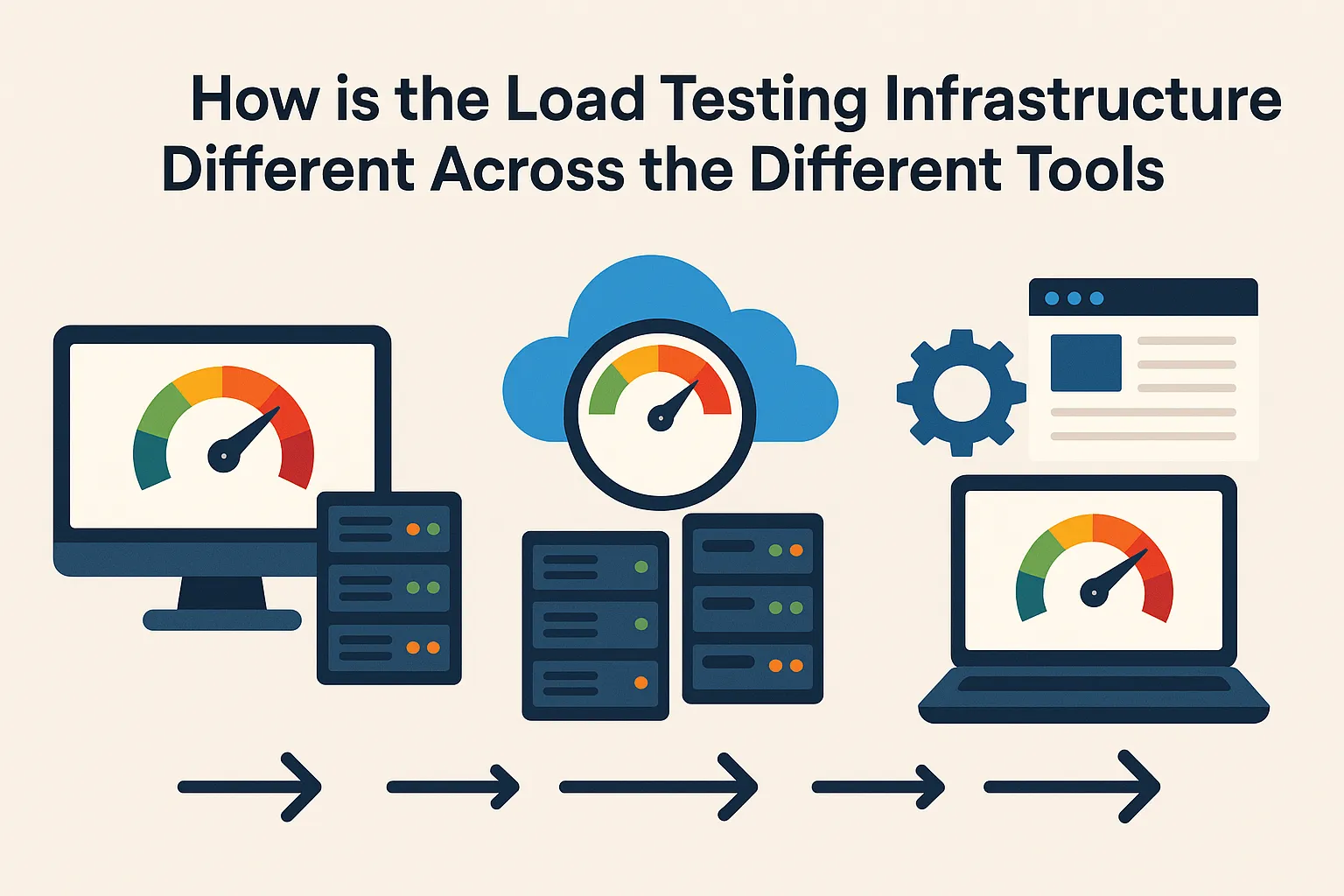
JMeter: Thread-based and optionally distributed
Gatling: Asynchronous engine focused on non-blocking for high concurrency
The Grinder: Agent-based with Jython Scripting
k6: Lightweight CLI engine focused on the CI/CD process.
Keploy: Records real user traffic and replays for a real-world testing experience.
Different automation tools will have different resource usage, scalability, and automation readiness, meaning certain tools work better in certain environments. You should always compare these features among performance testing tools for optimal results.
Key Features of the Top 5 Open Source Load Testing Tools
Keploy: Realistic Traffic Replay for Accurate Performance

-
Replays real-world scenarios for accurate performance validation
-
Records API traffic from production or staging
-
Integrates with CI/CD pipelines
-
Masks sensitive data; connecting functional and performance testing, while reducing manual effort
Keploy is right for teams that need a realistic api load testing tool and accurate performance validation of their systems.
Apache JMeter: Broad Protocol Support and Ease of Use

-
Supports HTTP, FTP, JDBC, SOAP, JMS
-
Distributed execution capability for heavier loads
-
Active plugin ecosystem
-
Friendly GUI for testers who have less coding experience.
Keeps its spot as one of the leading choices for testing software usability because of its protocol coverage and ease of setup.
Gatling: Load Testing with High Concurrency and Code-Driven Simplicity

-
Uses a Scala-based domain-specific language for script creation
-
Ensures absolutely minimal latency under high concurrency with an asynchronous engine
-
Features detailed dashboards in HTML format
-
Integrates exceptionally well with CI/CD workflows
Gatling is a strong option for an open source performance testing tool or framework for development-centric teams.
The Grinder: Flexible Testing Distributed Testing with Scripting

-
Agent-based model of scripts written in parallel allows users to implement their load generation in parallel
-
Supports user customization with the use of Jython scripting for unique scenarios
-
Flexible and simple to use
-
Effective to use for long-duration or highly specific test cases
The Grinder is a very strong option for load automation and complex workloads.
k6: A Lightweight Load Testing Tool That Supports CI/CD

-
Scripting in JavaScript and Browser-based Testing
-
Great for load testing APIs, microservices and cloud-native apps
-
It is lightweight, scalable, and has a command-line interface
-
You can create Grafana dashboards for monitoring in real-time
Use k6 for teams looking to integrate api load testing systems into DevOPs workflows.
Comparison of Open Source Load Testing Tool Results
To aid teams in understanding how these tools have responded under various conditions, we have compiled metrics relating to performance: concurrency, latency, and resource usage. The following table displays a high-level summary to assist with finding the best load testing tool suited to your needs.
| Tool | Max Concurrent Users | Average Latency | Throughput | Resource Usage | Scalability |
| --- | --- | --- | --- | --- | --- |
| Keploy | Medium (based on recorded traffic) | Low | Medium-High | Efficient (replay only) | High (CI/CD pipelines) |
| JMeter | High (distributed setup) | Medium-High | High | Heavy (GUI + threads) | Medium-High |
| Gatling | Very High | Low | Very High | Lightweight | High |
| Grinder | High | Medium | Medium | Medium | High (agents) |
| k6 | Very High | Low | Very High | Very Lightweight | Very High (cloud & CI/CD) |
Feature Comparison of Open Source Load Testing Tools
Next, we compare the features of each tool, including scripting languages, protocol support, CI/CD integration, reporting, and distributed testing capabilities. This helps teams evaluate which load testing framework best fits their workflow.
| Feature / Tool | JMeter | Gatling | Grinder | k6 | Keploy |
| --- | --- | --- | --- | --- | --- |
| Scripting Language | GUI + XML | Scala | Jython | JS | Record & Replay |
| Protocol Support | HTTP, FTP, JDBC, SOAP, JMS | HTTP, WebSockets | HTTP, Custom | HTTP, gRPC, WebSockets | API / HTTP |
| CI/CD Integration | Moderate | High | Moderate | Very High | High |
| Reporting | GUI & HTML | HTML | CSV | JSON & HTML | HTML + Dashboard |
| Distributed Testing | Yes | Limited | Yes | Yes | Yes (replay scale) |
| Ease of Use | Easy | Medium | Medium | Medium | Easy |
| Automation Friendly | Medium | High | High | Very High | High |
Best Practices for Using Open Source Load Testing Tools

-
Conduct tests in a dedicated environment to mitigate the impact on the production environment
-
Utilize tools integrated into CI/CD pipelines for automated load testing
-
Use both synthetic and real-traffic testing to maximize coverage
-
Take reasonable action to mask sensitive data and sample traffic in accordance with the situation
-
Conduct multiple load test scenarios (low, medium, peak) to identify trends
Following these practices will help ensure your performance testing tools will be a reliable source of actionable results for your speed and load testing efforts.
Future Trends of Open Source Load Testing Tools
Open source software testing tools are rapidly evolving to meet the growing needs of modern application architectures. AI-assisted test generation has become more commonplace, and now, for example, it will allow teams to better predict the expected load pattern, along with potential bottlenecks, before they ever hit the browser. The cloud-native orchestration of distributed test runners has also seen significant adoption, especially with respect to simulating a high traffic scenario that would typically require significant local infrastructure.
There is also a growing trend of leveraging hybrid testing strategies that blend synthetic traffic testing with real-user traffic replay to create an even more realistic performance profile. And like other modern performance testing tools, they are working on improved observability and dashboards, for better tracking of performance metrics and quicker, informed decision-making.
Conclusion
Choosing an open-source load testing tool depends on team expectations and requirements derived from system architecture, team workflows, etc. Tools like JMeter work very well for an entire range of protocol coverage and a tester on their team who is more GUI-driven, while Gatling is a good fit for development teams wanting to introduce a code-based, high-concurrency testing experience. The Grinder works well for distributed custom scenarios, and k6 is tailored for lightweight testing that works with CI/CD. Keploy is uniquely different because it allows a tester to replay realistic traffic, which allows teams to validate performance under actual user conditions. Knowing the pros and cons of the load test tools, and perhaps integrating different solutions effectively, means teams can build a comprehensive load test strategy to ensure applications are reliable, scalable, and responsive during maximum loads.
FAQs
1\. What factors should I consider when choosing an open source load testing tool?
You should look at the protocol supported, concurrency capability, CI/CD compatibility, ease of scripting, reporting capabilities, and resource utilization. Ultimately, the right tool will depend on your technology stack, performance goals, and level of automation maturity you're comfortable with.
2\. Can open source load testing tools be used for continuous performance testing in CI/CD pipelines?
Yes. Tools such as Keploy, k6 are all CI/CD tool agnostic and can integrate with CI/CD and deploy in a way that allows automated performance regression testing to be performed during any release cycle.
3\. Are open source load testing tools reliable enough for production-grade performance benchmarking?
Yes. Many open source performance testing tools are used in enterprises, including Keploy, JMeter, and Gatling. These open source tools have scalability, customization, and community-based enhancements without the constraint of licensing fees.
4\. Do load testing tools support both synthetic and real-traffic performance evaluation?
Most load testing tools generate synthetic load; however, tools like Keploy have the capability to replay the real traffic of actual users in production and use it to assess performance based on actual usage patterns. The combination of both is the best route to a precise outcome.
